On Robotics Applications as Connected Systems with OpenSensorHub and ROS

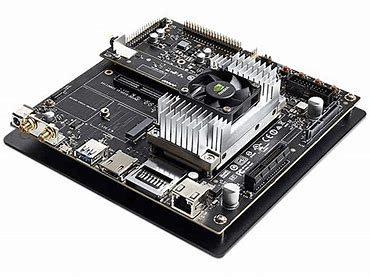
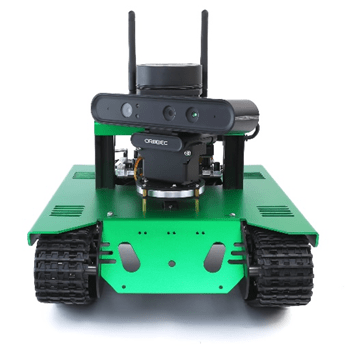
In the past, we wrote a brief article on OpenSensorHub (OSH) integration with robotics platforms where we used an inexpensive STEM platform (“Yahboom G1 AI vision smart tank robot kit with WiFi video camera for Raspberry Pi 4B”), stripped the software and wrote a completely OSH centric web-accessible services solution for monitoring and tasking the robot.  The entire software stack was hosted on the on-board Raspberry Pi. However, we were lacking the location-enabled and geographically aware aspects to this solution simply because we did not equip it with its own GPS unit.  We also explored running OSH on Nvidia Jetson cards and making use of the GPUs to improve the processing necessary to augment sensor observations with SensorML process chains making use of artificial intelligence, machine learning, and computer vision.  The ideal solution would be to combine the capabilities of the Robot Operating System (ROS) with OSH to create truly location-enabled, geographically aware, web-accessible robotics platform powered by Nvidia Jetson single board computer (SBC).  To this end we acquired another, albeit more expensive but not prohibitively so, STEM robotics platform – The Yahboom Transbot ROS package.  This system includes a SLAMTEC RP-Lidar A1 (2-dimensional), an Orbbec Astra Pro (RGB and Depth Camera), a wireless PS-2 like controller, and an Nvidia Jetson Nano with a hardware interface board.  This package includes prebuilt ROS-1 packages on Ubuntu 18.02 Linux and an optional downloadable smart phone app.  To complete the solution, we added a compatible GPS module that could be connected via USB to the SBC.
Unleashing Processing Power with OpenSensorHub and GPUs

OpenSensorHub allows for vertical and horizontal integration of systems where multiple OpenSensorHub enabled systems can be deployed and configured to share data. This can allow for vertical or horizontal integration to provide a network and hierarchy of systems, if needed, configurable to meet the desired objectives. OpenSensorHub allows for two distinct methods for such integration: SOS-T (Sensor Observation Service – Transactional) or Sensor Web Enablement Virtual Sensors. SOS-T allows for a push mechanism directly from sensors with network connectivity to an OpenSensorHub instance or for a “local” OpenSensorHub instance to push a sensor’s description and observations to a “remote” instance of OpenSensorHub. SWE Virtual Sensors, on the other hand, allow for a pull type mechanism where an instance of OpenSensorHub is configured to mirror one or more sensors on a remote instance of OpenSensorHub. To clients connecting with their “local” instance of OpenSensorHub the fact that the sensor is actually hosted and managed by a “remote” instance is of no consequence.

Augmented Sensor Observations and Tasking through Artificial Intelligence (AI), Machine Learning (ML), and Computer Vision (CV) Processes in OpenSensorHub

Sensor tasking and observations as well as processes and process chains are core capabilities provided by OpenSensorHub (OSH) through its implementation of Open Geospatial Consortium’s (OGC) Sensor Web Enablement (SWE), SWE Common Data, and SensorML standards.  Sensor outputs can be integrated into processes and process chains receiving one or more sensors’ outputs as input and in turn generating new outputs.  Processes and process chains employing Artificial Intelligence (AI), Machine Learning (ML), & Computer Vision (CV) algorithms and libraries augment situational awareness by providing reasoning, identification, classification, and knowledge discovery generating novel and timely outputs for situational awareness.

Kinect Support on RaspberryPi 3B+

What’s more fun than Kinect?

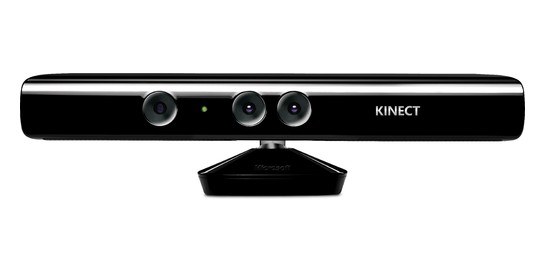
How about RaspberryPi with Kinect…even better RaspberryPi running OpenSensorHub controlling a Kinect! That is right OpenSensorHub now supports Kinect sensors on RaspberryPi.

What do I have to do to get this tremendous trio? Well simply download a distribution of OpenSensorHub, download, build, and install the OpenSensorHub Video addon from the addons repository in GitHub and enjoy.

We have added support for Kinect on OpenSensorHub using OpenKinect’s Libfreenect library built on RasperryPi 3B+ and an interface cable and power supply combo (IDS 1 Pc Xbox 360 Kinect Sensor USB AV Adapter) readily available online for about $10. So break out your Kinects and RaspberryPi’s and have some fun!

Kinect Support in OpenSensorHub

Microsoft Kinect has been around for some time and here at OpenSensorHub.org we decided to have some fun with this neat sensor platform.